
Rose Flower – Types and Kinds of Roses
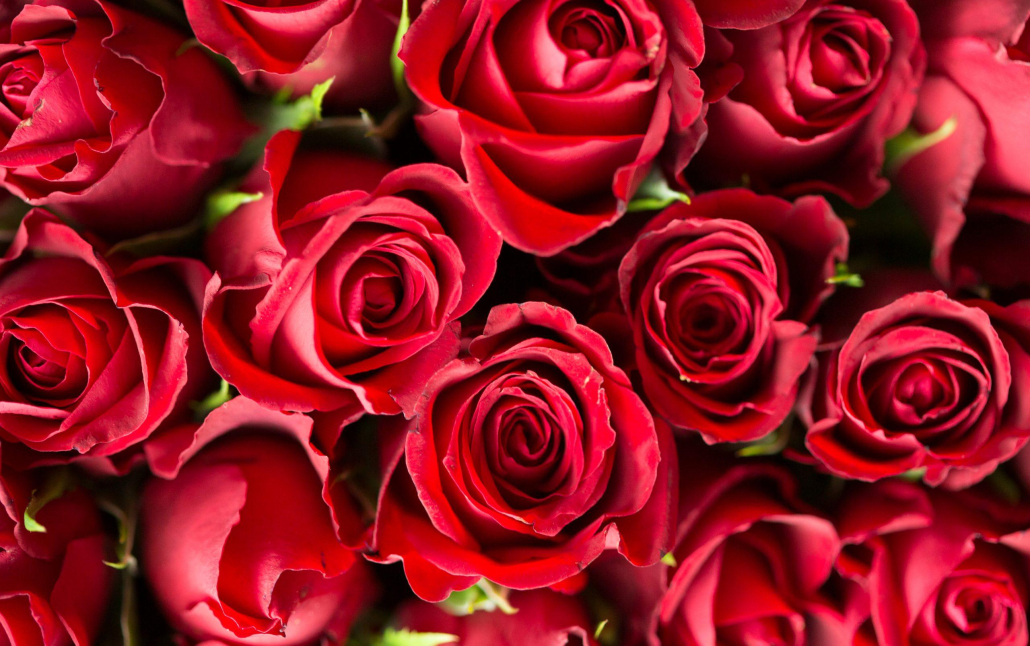
Roses are very difficult culture for cultivation and exacting. For example, roses love open places. Firstly, the separate plant isn’t constrained and can pay attention to itself; secondly, density on a window sill promotes the defeat of roses by illnesses and wreckers. Roses demand observance of modes, and if you cannot observe them, your rose will live at most a year. Roses don’t suffer dry air and heats, especially in the winter, from it leaves become shallow, dry and are showered, buds aren’t formed or flowering is short. Roses love when the soil breathes, therefore it’s necessary to loosen the earth in a pot more often.


Light Requirements and Placement
Roses are photophilous plants. The best windows for roses are southeast and southwest. At southern windows, it’s too hot in the summer, in very sunny days. On a solar window sill, flowers of roses quickly reveal and are quickly showered. At northern windows, light suffices for roses.
Air Circulation
Roses are very exacting to fresh air. Therefore, when in the spring weather allows, it’s necessary to start to open windows and gradually accustom roses to fresh air. It is desirable to hold roses on a balcony, terrace in the summer, to a veranda or at an open window, it’s possible to take out in a garden and to drive in the ground. Closeness in rooms strongly detains in the summer growth and flowering of roses.
Water and Humidity
Roses are very sensitive to the water modulation, especially in the winter and in the spring, with the beginning of the first growth. For roses, it is better not to add some water, than to pour it. To increase watering is possible in the spring, when on plants not only there will be young kidneys but also when enough leaves already will be dismissed. In the summer, watering of roses must be plentiful. In the spring and in the summer, it is impossible to suppose dryings of an earthen clod. Water should be of room temperature or warmer. Very harmful for roses if to water them with cold water when the plant long stood at a solar window, i.e., roots and the earth in a pot have heated up. Approximately from the middle of August, when light day has begun to decline and the autumn approaches, watering starts to reduce, it sufficient, but not as plentiful as in the summer, it concerns those grades which blossomed since spring and summer. Those grades which have begun flowering from the middle of summer, watering must be also plentiful, and reduce watering with the flowering termination.
Roses love damp air, especially in the summer. Therefore, they are often sprayed – 2-3 times a day. At dry air, a rose very often is surprised by wreckers. Very well roses feel if once a week to arrange a warm shower, under not strong pressure of water. It’s impossible to spray roses when they stand on the sun, otherwise, the plant will get solar burns.

Temperature and Seasonal Care
From the middle of summer and till late autumn, a rose contains at usual room temperature and is taken out in a garden or on a balcony in the summer. Optimum spring and summer temperature 14-20°C.
If you don’t have such a place where it is possible to contain roses in the winter at the necessary temperature, you can leave plants on a window sill in an apartment. But, to fence off roses from a warm room and heat from batteries, as much as possible to approach temperature of their maintenance to demanded (5-8°C), it is possible to put a glass barrier.
At the maintenance of roses in cool conditions (5-8°C), they must be watered seldom, i.e., the earth should dry up, but not dry up completely, and also don’t spray. Water with cool water. It is necessary to watch that leaves of roses aren’t adjoined to a windowpane; if on a window sill there will be some pots, they should not stand together. The place for overwintering of roses should be kept in dryness and cleanliness.
Since February, in spite of the fact that temperature is low, light day increases, more sunny days and the rose starts to get under way in growth. Therefore, from the beginning of March, clean protective glass and if the plant wintered on a veranda or other cool premise it brings in a room.
With carrying over of plants to a room, it is necessary to carry out hygienic procedures: to examine a bush, to remove, if there are dried up, turned yellow leaflets, the turned black runaways, and to arrange a plant a warm shower, preliminary having washed its soap water to prevent occurrence of wreckers.
The Language of Roses
The red rose means: with a hot impulse, with big lifting (enthusiasm). The pink rose designates true love and friendship. The white rose expresses pure love, a female crystal-clear soul.
Besides color and flowering stage, in the language of roses, the important role is played by the quantity of stalks of the presented bouquet:
- 1 rose: One heart, in yellow or orange colour – «lonely heart»;
- 3 roses: I love you;
- 4 and 7 roses: It isn’t accepted to give;
- 5 roses: Happiness, the blessing, good luck (a literal translation: 5 blessings you on a threshold) that houses you always had happiness and were accompanied by good luck;
- 10 roses: Ten times gold, ten times beautiful (expresses admiration of the beloved);
- 11 roses: One heart, one sense (usually – a gift from the loving husband to the favourite wife and on the contrary);
- 12 roses: from month to month to present the loving heart (pertinently to give for the anniversary of the acquaintance, the first meeting, or wedding);
- 16 roses: I wish good luck (for the friend, the blood relative);
- 19 roses: All life together (it is accepted to give on wedding);
- 21 rose: The most favourite, love to “highest point”;
- 25 roses: Declaration of love;
- 27 roses: I love the wife;
- 29 roses: Eternally favourite;
- 36 roses: Let every day will be joyful;
- 51 rose: Forever in my heart;
- 101 rose: You are my unique!
Rose and dogrose, as each flower store, in itself curative properties. Rose-petals and dogrose can be added in tea – it will add forces to your organism.
From petals of roses and dogrose also prepare jam. For this purpose, collect fresh flowers and stack thin layers in a can, thus, pouring each layer with sugar and densely pressing with the spoon. Then the can is put in a refrigerator and after a while when the syrup is formed, it is merged, and petals are strewed again with sugar. The fragrant syrup received thus from petals of roses and a dogrose, is very useful.
Essence which is applied in cosmetic products also is made of rose-petals and is in great demand in the world.
Pink water or rose attar are successfully used in aromatherapy.
Roses cut off for dry aromatic mixes, while buds have not opened and suspend downwards buds for drying. From dry petals of roses, it is possible to prepare a cosmetic bath, having added there dry leaves of rosemary. After a bath, the skin is smoothed, the inflammation is removed.
The cooled pink water is used as a means from wrinkles. If to the dried-up rose-petals add dry flowers of chamomiles, mints, adding vegetable oil it is possible to receive a wonderful mask for dry skin.
Wish to make your own bouquet “with the latent sense” – here are some standard values, different colors attributed to roses and flowering stages:
- Red roses – a declaration of love, boldness, and respect.
- White roses have some values: deep respect and humility, cleanliness and innocence, secret and humility, and also exclamation: «You are divine!» White and red roses together, or white roses with a red border of a petal mean reunion.
- Pink roses – usually a youth and modesty. Also grace and nobleness, softness, tenderness, trust. An excellent way to underline a youth and charm of the girl. Are ideal, when you do not feel ready to tell I love you, but wish to let know that you are attracted to this person. Pink roses is the hint, which everyone can interpret in their own way.
- Yellow roses usually mean jealousy and love fading, though presently these ignored flowers again become very popular and symbolise a wish of a happy, safe life.
- Coral or orange roses express enthusiasm to develop the relation and desire.
- Red and yellow roses in a combination mean pleasure and happiness.
- Roses of pale shades – friendship, pleasure from dialogue.
- Buds of roses symbolise a youth, beauty, and heart, unsophisticated love. Red buds mean «pure and charming», and white – «too young to love».
- The bud of a musky rose means a declaration of love.
- The only one rose symbolises simplicity, a rose in full bloom – speaks I love or I still love, semi-disbursed – timid love.
- A bouquet of roses in full bloom expresses gratitude. Leaves – a hope symbol. And if to tear off them then the poor remained roses will tell: to hope there is nothing. If to clean thorns, it means – you have nothing to be afraid. The dismissed rose with two buds, appears, means mysteriousness or reserve.
- A tea rose – «I will always remember you».
- Two roses connected or fastened together are bulletins of engagement or coming nearer wedding.

What do different colors of roses symbolize?
Different colors of roses carry unique meanings. Red roses symbolize love and passion, white roses represent purity and innocence, yellow roses stand for friendship and joy, pink roses convey admiration and gratitude, and orange roses express enthusiasm and desire.
How often should I water my roses?
Roses should be watered deeply but infrequently to encourage deep root growth. Typically, watering once a week with about 1 inch of water is sufficient, but this may vary depending on your climate and soil type. Always check the soil moisture before watering.
Can roses grow in pots?
Yes, roses can grow in pots. Make sure to choose a large enough container with good drainage holes to accommodate the root system. Use high-quality potting soil and ensure the rose gets at least 6 hours of sunlight daily.
How long do roses last after being cut?
Cut roses can last for about a week with proper care. To extend their life, cut the stems at an angle under running water, use a clean vase and fresh water, and add a flower preservative. Keep them away from direct sunlight and heat sources.
Are there any fragrant rose varieties?
Yes, many rose varieties are known for their fragrance. Some of the most fragrant roses include Damask roses, David Austin roses, and Bourbon roses. The intensity of fragrance can vary based on the variety, time of day, and weather conditions.
Can roses be used in cooking or medicine?
Yes, roses have culinary and medicinal uses. Rose petals are edible and can be used in teas, jams, desserts, and salads. Rosehips, the fruit of the rose plant, are rich in vitamin C and antioxidants and can be used to make teas, syrups, and supplements. Always ensure the roses are free of pesticides and chemicals before consumption.
How can I prevent pests and diseases in my rose garden?
Prevent pests and diseases by planting roses in well-draining soil, ensuring adequate air circulation around the plants, and practicing good hygiene by removing fallen leaves and debris. Regularly inspect your roses for signs of pests or disease and treat promptly with appropriate organic or chemical treatments.